Planning a three days in Prague itinerary can feel overwhelming when you’re trying to fit in the city’s cobblestone streets, Gothic churches, and world-famous landmarks like the Charles Bridge and Old Town Square without wasting time or missing the highlights. This guide gives you a clear, stress-free plan for three days in Prague, with each day organised by neighbourhood so you can see the city’s biggest sights without feeling rushed. Prague has a lot packed into a compact, historic center, so a structured itinerary makes a short trip much easier and far more enjoyable.
Don’t worry, though. This guide is built for travelers with three days in Prague who want a simple way to explore the city’s historical, cultural, and food highlights. We’ve broken the itinerary down into daily plans covering must-see sights like Prague Castle, the Astronomical Clock, Malá Strana, and Vyšehrad, along with the best time to visit, where to stay, how to get around, what Czech food to try, and practical tips to make the most of your trip.
Get ready to fall in love with one of Europe’s most beautiful cities!
Key Takeaways
- Visit Prague in May, June or September for great weather, fewer tourists and some cracking festivals like the Prague Marathon.
- Stay in the Old Town or Malá Strana areas, and you’ll be right in the heart of things – close to the famous sites like Charles Bridge, the Astronomical Clock (which is over 600 years old) and Prague Castle.
- Plan your time wisely: Day 1 is for exploring the historic churches in Old Town Square; Day 2 is for heading to Prague Castle district and Malá Strana, where you can see the famous John Lennon Wall; Day 3 is for a peaceful visit to Vyšehrad Fortress, and a wander around trendy Karlín and Žižkov.
- Give your taste buds a treat with some classic Czech dishes like goulash at Lokal restaurant, and pick up a sweet Trdelník chimney cake as you stroll around the city.
- To get around the city without breaking the bank, pick up a 72-hour public transport pass for just 330 CZK.
Why Visit Prague?
Prague is a city that’s just brimming with stunning sights and rich history, and Prague’s history stretches from its medieval origins through the Holy Roman Empire to the Velvet Revolution; it’s also one of the more accessible european capitals – you can walk from the iconic Charles Bridge across the Vltava River to Old Town Prague, explore UNESCO World Heritage Sites like Prague Castle and St Vitus Cathedral or take a stroll through the Jewish Quarter’s medieval buildings. Compared with other european capitals, it also stays relatively affordable and compact.
Prague’s unique architecture is a real treat too – mix a bit of Gothic landmarks with ornate baroque churches and some colourful cobblestone streets, and you’re in for a real treat.
And then there’s the local cuisine – visitors can try hearty czech dishes like goulash at well-loved spots like Lokal, and a sweet treat called Trdelník (chimney cake) while exploring the winding alleys near Wenceslas Square.
Plus, the public transport system is a doddle, making it easy to get around this vibrant capital city of Central Europe.
https://www.youtube.com/watch?v=6WUXU4LXSYU&pp=ygUIcHJhZ3VlIDQ%3D
Best Time to Visit Prague
Now you know why Prague draws you in, choosing the right time of year to visit is also pretty important. Late spring in May and June is perfect for a stroll through Old Town district, or a leisurely walk over the famous Charles Bridge.
Early fall in September is even better – warm days and fewer people crowding around popular places like Prague Castle and Golden Lane. Spring from March to May is a great time for events like the Prague Marathon and the Food Festival, and the weather is mild enough to explore on foot.
November is a bit chilly, but it’s a great time to avoid the crowds and have a peaceful walk along some of the lesser-known streets or visit some of the museums without the queues. December is cold and busy due to its great Christmas markets, but it’s a lovely time to be here.
Summer months from May to August can get pretty hot and busy what with all the festivals like Prague Spring and Prague Pride.
Each season has its own special charm in Prague – choose wisely when you’re planning your visit.
Where to Stay in Prague
Choosing the right spot to stay in Prague makes all the difference – read on for our tips on the neighbourhoods that put you close to the historic sites, local restaurants and city sights.
Old Town (Staré Město)
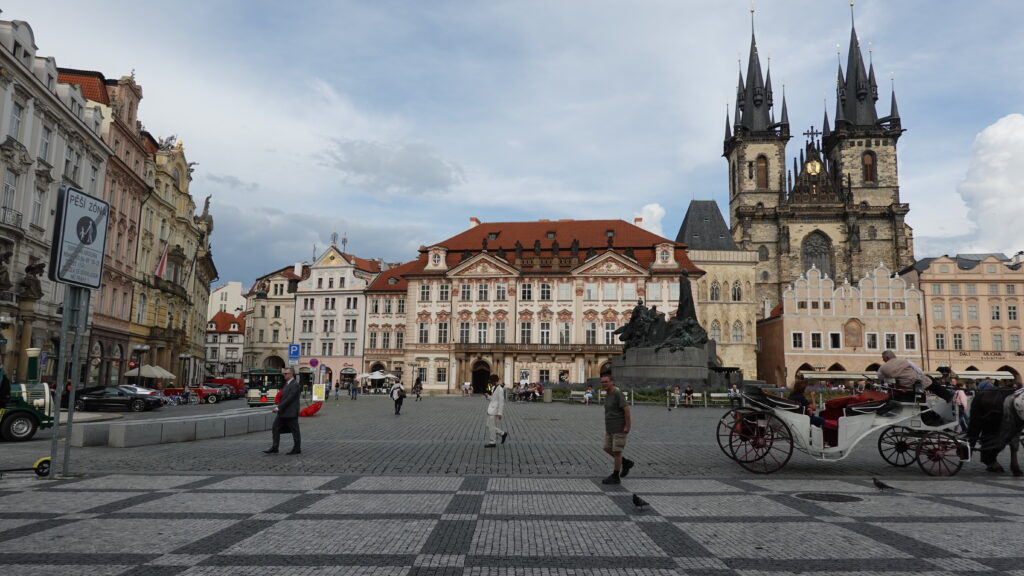
Old Town (Staré Město) is the most famous area in Prague – its got Gothic spires, cobblestone streets and loads of history. The area was established as the original marketplace in the 12th century and Old Town Square is right at its heart – you can’t help but be charmed by all the sights and sounds.
Take a look at the Prague astronomical clock on the Old Town Hall Tower – it’s iconic. Climb it for some fantastic views of the city centre below. Nearby, there are loads of other sites to explore, like the Josefov (the Jewish Quarter), Church of Our Lady before Týn, the Powder Tower and St. Nicholas Church – all within easy walking distance.
Staying in this area puts you in the city center, so Prague’s historic center is easy to explore on foot, and you stay close to all the major sights like Charles Bridge and the town bridge tower, and there are loads of hotels to choose from ranging from luxury stays at around $100 to $300 per night.The whole area is a UNESCO World Heritage site, with medieval streets and iconic landmarks that are a big part of prague’s beauty, letting you step back in time to medieval Europe every morning. Outside your door, you’ll find lively cafes serving up a great cup of Czech beer or a traditional Czech meal to help you recover from a day of sightseeing nearby landmarks like the Franz Kafka Museum or the Old Jewish Cemetery.
Malá Strana
Malá Strana, also known as Lesser Town, is the gem sitting below Prague Castle. Staying here means you’re within easy walking distance of some of Prague’s key sights, like the John Lennon Wall and Charles Bridge. You can pick from a charming inn or a cosy hotel in a quiet street, not far from city centre landmarks like St. Nicholas Church and Kampa Island’s art scene; for a luxury stay, Four Seasons Hotel Prague is a convenient option, and Seasons Hotel Prague also puts you close to the same riverside sights.
Malá Strana feels like stepping into a fairytale – every street has its own story just waiting to be discovered.
Hradčany (Castle District)
The Hradčany is the place to go for a royal experience, right near Prague Castle – the largest ancient castle complex and the largest coherent castle complex in the world. Take a visit to St. Vitus Cathedral inside the castle grounds to see the stunning stained glass windows and get a sense of the grand history of the Bohemian kings and Holy Roman Emperors. Near Malá Strana, Kampa Park is a serene spot along the Vltava River.
You can explore famous spots like Golden Lane and the Old Royal Palace by walking uphill or hopping on the tram lines 22 or 23. The district’s castle towers also frame beautiful views over the city centre red rooftops and the Vltava River below – it’s a great spot for taking photos during your days in Prague. On nearby landmarks, Saint Wenceslas appears as the patron saint tied to Prague’s royal history.
Getting Around Prague
Prague’s city centre is a compact place to explore on foot. For longer trips, Prague offers an efficient public transport system with trams, buses and metro trains. You can buy tickets at a station or, better still, download the PID Lítačka app for quick access through your smartphone.
A 72-hour public transport pass costs just 330 Czech koruna (CZK) and covers all your rides within the city limits.
You also have the option of taking a guided tour or hiring a private tour guide if you prefer to have it all organised in comfort. Most of the key sites like the Dancing House or the Old Town Bridge Tower are well-linked by tram lines; even Václav Havel Airport Prague connects up smoothly to downtown routes using public transit.
You’ll need local currency, Czech koruna, to buy tickets or book trips around town because a lot of services don’t take cards or foreign money.
Day 1: Exploring the Heart of Old Town
Start your Prague trip by wandering through the lively city centre, full of narrow streets and historic buildings. Don’t forget to bring your camera because you’ll see famous spots, tasty street food stalls, medieval towers and impressive architecture around every corner.
Visit the Astronomical Clock and Old Town Hall Tower
Have a look at the famous Astronomical Clock, over 600 years old. Every hour on the dot, you can watch a short show and hear the legend of clockmaker Hanu being blinded so he couldn’t make another clock like it.
Then, climb the Old Town Hall Tower, a tall medieval tower that’s about 70 metres high with great views of the city centre. Tickets only cost 250 CZK – it’s a great spot to take some memorable photos during your 3 days in Prague.
Admire the Church of Our Lady before Týn
Stand in Old Town Square and gaze upwards at the Church of Our Lady before Týn. This is a Gothic church built between 1350 and 1511 with two stunning spires that rise high above the city streets.
Inside, you’ll see some Baroque elements that were added after a fire in 1679 – look out for famous artworks by Czech painter Karl Skreta and altars carved by Jan Jiri Bendl and Ferdinand Maximilian Brokoff.
Also inside is Prague’s oldest baptistery, which dates back to 1414 – it’s a real special site full of history. You’ll feel connected to Prague’s rich past as you explore this iconic landmark near the Jewish Museum area. After that, head to Josefov (Jewish Quarter) for your next stop.
Explore Josefov (Jewish Quarter)
Make your way to Josefov, Prague’s Jewish Quarter, a powerful place to understand centuries of [jewish life] and a crucial chapter of Czech history. The Jewish Museum here includes five synagogues and a cemetery, and tickets usually cost around 450-600 CZK. Here, you can see one of Europe’s most [significant jewish cemeteries], with 12,000 visible graves – some parts have up to ten burial layers from centuries past.
Two places that really stand out are the Old-New Synagogue, Europe’s oldest active synagogue, and the Spanish Synagogue with its beautiful ornate designs. Pinkas Synagogue memorializes 78,000 Holocaust victims, and the nearby [jerusalem synagogue] is known for its striking Art Nouveau design. After exploring Josefov, head next to Letná Park for some stunning city views.
Relax at Letná Park for some stunning city views
Head to Letná Park for a great view of Prague’s bridges and city skyline. It’s a pretty easy 1-mile walk and there’s lots to see along the way. Climb up to where the huge Stalin monument used to stand – now it hosts a big beer garden that’s perfect for trying local Czech food and drinks in the sunshine.
Be sure to stop by the pretty Art Nouveau pavilion as you walk through this lovely green space above Old Town – you can snap photos of street art or rest under the shade of some trees before your next adventure.## Day 2: Uncovering the Hidden Treasures of Prague Castle and Malá Strana
Your second day in Prague gets off to a cracking start at Europe’s largest ancient castle – a treasure trove of royal history and stunning Gothic architecture. By mid-morning, you’ll be ready to head over to the iconic stone bridge and discover the unique charm of Malá Strana, its colourful streets, and artistic vibe.
Discover Prague Castle and St. Vitus Cathedral
Kick off your second day with a visit to Prague Castle, the largest castle complex in the world – and it’s absolutely free to explore, although you will need a ticket to get in – just 250 CZK will give you access to a whole load of ancient history and culture. At its heart stands St. Vitus Cathedral, a mind-blowing Gothic church that’s been 600 years in the making and served as a coronation and burial site for bohemian kings and holy roman emperors. You’ll be gobsmacked by the sheer scale and beauty of its tall arches and colourful windows, including the chapel linked to saint wenceslas.
Take a few minutes to soak up the atmosphere inside the cathedral, and when you’re done, take a step outside for some truly stunning views of the likes of St. George’s Basilica or the red-tiled rooftops of Old Town below.
It’s a photographer’s dream come true, so be sure to bring your camera along and capture as many memories as you can.
Wander down Golden Lane and Old Royal Palace
Golden Lane really does take you back in time, with its brightly painted houses and quirky little shops. Not so long ago, this was home to castle guards and skilled workers – today, it’s just as charming for visitors who wander through its streets, taking in every last detail. Franz Kafka briefly lived here, which adds another layer of history to this small street within the castle complex.
Just a short walk away is the Old Royal Palace, which boasts some seriously impressive architecture that spans centuries. Nearby, St. Vitus Cathedral is closely tied to Bohemian kings and Holy Roman Emperors. Saint Wenceslas is one of the key historical figures associated with it. The best bit? Entry to Golden Lane and the Old Royal Palace is free with your Prague Castle ticket – which makes it a no-brainer to include on your visit after leaving St. Vitus Cathedral, or before heading over to Charles Bridge.
Stroll across Charles Bridge
From the quiet charm of Golden Lane, step onto historic Charles Bridge – which was no mean feat, given that it took 50 years to finish in 1357! As you stroll from the castle district to Old Town, take in some truly stunning views over the Vltava River, and Prague’s famous skyline.
This 600-year-old bridge boasts an impressive 30 baroque-style statues, although, let’s face it, the originals are safely tucked away in Lapidarium – but the copies will still give you plenty to look at. Street artists sell their wares, while musicians play lively tunes to entertain the crowds. It can get a bit busy during the day, so try and time your visit for early morning or late evening for a more relaxed vibe. Don’t forget to grab your camera – this scene is definitely one for the photo album.
Visit the John Lennon Wall
Next up, head to Kampa Island and check out the John Lennon Wall – a truly inspiring tribute to all things peace and freedom. This iconic wall started out as a symbol of hope back in the 80s, and locals would paint messages of peace and freedom all over it. These days, it’s a riot of colour and creativity, with people from all over the world adding their own bit of art to the wall.
It’s a fantastic spot for some great photos, and a lovely little oasis of peace in the midst of all the hustle and bustle. You might even want to leave your own message to add to the wall – but be sure to do it respectfully! It also offers a glimpse of modern Prague, a nice contrast to the historic core you visited earlier.
Day 3: Discovering Prague’s Hidden Gems
Day three is all about Prague’s lesser-known spots and vibrant local areas – giving you a whole new perspective on the city. So, let’s get started.
Morning at Vyšehrad Fortress and Cemetery
Start your day with a visit to Vyšehrad Fortress, perched up high above the Vltava River – and what a view it gives you of the city below. Take a leisurely stroll along the old walls, and then head to the Basilica of St. Peter and St. Paul – a beautiful old church that’s been standing since the 11th century.
Next up, head over to Vyšehrad Cemetery, which is the final resting place for some of Prague’s most famous sons and daughters – including the great composer Antonín Dvořák and writer Karel Čapek. Take some time to wander around, taking in the beautiful sculptures that pay tribute to the people who helped shape the city’s culture.
Explore the trendy Karlín District
After your morning at Vyšehrad Fortress, head over to Karlín – which is Prague’s answer to a trendy local neighbourhood. You’ll find all sorts of cool cafes, small shops, and loads of street art. It’s a great place to get a taste of daily life in Prague – without all the crowds of tourists.
Take a stroll down Křižíkova Street, and check out the brilliant murals that cover the walls. Grab a coffee from Můj šálek kávy or EMA espresso bar – both of which are super local and full of character. And don’t miss Kasárna Karlín – an old army building that’s now home to all sorts of cool art shows, live music events, and pop-up markets.
Check out the Head of Franz Kafka SculptureCheck out the iconic Franz Kafka Head Sculpturenear the very heart of Prague. This real showstopper of a work by David Černý is a staggering 36 feet tall, with 42 actual rotating layers of steel which shape and reshape Kafka’s face in some seriously unique ways.
You’re in for a real treat : just watching this sculpture in motion is an amazing sight and one that you won’t want to miss , especially since its in such a great location. It’s also easy to combine with a stop near Wenceslas Square at the National Museum. Don’t miss out on this famous Prague attraction during your time here.
End with a memorable dinner in Žižkov
Spend your last evening in Prague with a wonderful dinner at one of the city’s top restaurants, in the Žižkov district. Tri Stolet Café and Restaurant serves up delicious dishes, good wine and offers a warm welcome. Unwind in the cosy atmosphere as you enjoy some tasty Czech food, and swap stories with your fellow travellers about your favourite bits of the trip.
The friendly staff at Tri Stolet are on hand to make sure you have a great dining experience. Try some of the local specialities which match up really well with the restaurant’s wine selection – you’ll get a proper taste of Prague’s culture. A meal here will give you just one more chance to soak up all that this great city has to offer before you head back home.
Must-Try Czech Foods in Prague
You’ll find hearty classics full of flavour, sweet street snacks to indulge in – and some tasty spots that are the real favourite haunts of the locals. Every bite brings you a little bit closer to Czech culture in Prague’s many cosy eateries and lively markets.
Traditional Czech Dishes like Svíčková and Goulash
Svíčková is a classic Czech dish often found on the menu at weddings and big family gatherings. It’s slow-cooked tender beef, in a rich creamy sauce, served with soft bread dumplings.
Goulash is another real must-try during your Prague stay. This thick beef stew is cooked slowly to build up deep flavour – it comes hot and hearty, alongside fluffy dumplings. Roast duck also ranks high on menus here, it’s cooked gently with caraway seeds until it’s nice and tender, then plated up with tangy sauerkraut and more dumplings.
For something sweet, try kynut ovocn knedlky – doughy little pastries filled with fruit, sprinkled lightly with powdered sugar and mild Czech sour cheese.
Now that you’ve tasted the real Czech flavours, take a walk around the city and try some of the sweet street snacks like Trdelník (Chimney Cake).
Trdelník (Chimney Cake)
You can’t miss trying a Trdelník in Prague. This tasty little treat is a favourite with both locals and tourists. The vendors wrap fresh dough around a stick, then slow-grill it over hot coals until it’s crisp outside.
You’ll find them warm, coated in sugar or cinnamon, and often loaded up with tasty fillings like chocolate spread or ice cream. Loads of street vendors in Old Town sell this sweet treat every day.
It’s perfect as an afternoon snack while strolling around the city streets of Eastern Europe.
Lokal and Naše Maso for Authentic Dining Experiences
Head to Lokal for a real taste of Czech food. This popular spot serves up traditional dishes like hearty Goulash and tasty Svíčková, packed with strong flavour in every bite. Naše Maso is a meat lover’s dream, and offers high-quality sausages as well as juicy burgers grilled to perfection.
Both places focus on great taste and texture, giving you true Czech cuisine that the locals love.
After sampling all these flavours, get ready for some handy tips on making your three days in Prague perfect.
Tips for a Perfect Three Days in Prague
Stay near the Old Town or Malá Strana – that way you’ll be right in the middle of the action and it’s easy to get to all the sights. Choose comfort at hotels like Hotel Paris Prague or vacation rentals close to sights and food spots. Prague is a popular tourist destination, so central rooms book up quickly. Try some Czech foods, such as hearty Goulash at Lokal or tasty Svíčková from Naše Maso.
Book a table early for dinner – since the popular places get filled up fast.
Use trams and buses in Prague – they’re a great way to save your energy. Prague’s historic center is walkable too, with Old Town and the castle only about 2 km apart. Get a three-day travel pass so you can move around cheap and quick between places like Prague Castle and Vyšehrad Fortress. Make a plan for each day of your trip – follow your itinerary closely and you’ll get the best city experience without rushing around madly.
Conclusion
Prague welcomes you with its history, beauty and endless charm. From Old Town’s famous clock to the hidden gems in Žižkov, every day offers loads of rich sights and tasty Czech dishes. Three days fly by in a flash – good planning means you can make the most of it.
Use this quick guide for your perfect city break, then leave Prague wishing you’d booked a longer trip. After one visit, you’ll be itching to return!
FAQs
1. What should I include in my three-day Prague itinerary?
Plan to visit the key sights like Old Town Square, Charles Bridge, and Prague Castle. Also make sure to fit in some short stops at some of the cosy cafes or local markets for a more relaxed vibe.
2. How can I best organisation my time during three days in Prague?Group your visits by area so you dont end up running around like a headless chicken; spend one day really getting to explore the historic centre another day around Lesser Town and the castle district to get those Instagram shots then finish off with some last minute museum visits or park strolls on your last day.
3. How do i get around Prague when i’m following a tight itinerary
Well, the good news is that getting around Prague is a doddle – public transport is cheap, simple and efficient, trams and metro lines pretty much cover all the major attractions, the signs are in English so you wont get lost, and there are also easy onward rail and bus links to other European cities.
4. Can i see all of Pragues main sights in just three days
Definitely, you’ll have three whole days to get a good look at the main landmarks without tearing around like a mad thing, and alongside Gothic highlights you’ll also encounter Baroque St. Nicholas Church among Prague’s standout historic buildings, without tearing around like a mad thing and there will be time to fit in some shopping and just chill too. If you extend your stay, the best extra option is a day trip for visiting Cesky Krumlov, especially for its castle and beautifully preserved Baroque theater.